Address
304 North Cardinal
St. Dorchester Center, MA 02124
Work Hours
Monday to Friday: 7AM - 7PM
Weekend: 10AM - 5PM
Address
304 North Cardinal
St. Dorchester Center, MA 02124
Work Hours
Monday to Friday: 7AM - 7PM
Weekend: 10AM - 5PM
Today, Made in China is no longer just a label of low cost and rough quality—it is undergoing a historic transformation toward precision, reliability, and innovation, reshaping how Europe and Germany perceive products from the East. As someone who has run a medical equipment factory for more than 30 years, I have personally witnessed every twist and turn of this journey: from small workshops struggling to survive, to repeated crises on the brink of bankruptcy, and now to a determined push for high-end manufacturing. This article tells the real story of Made in China’s evolution, the pain of reform, and our commitment to breaking old stereotypes with quality.
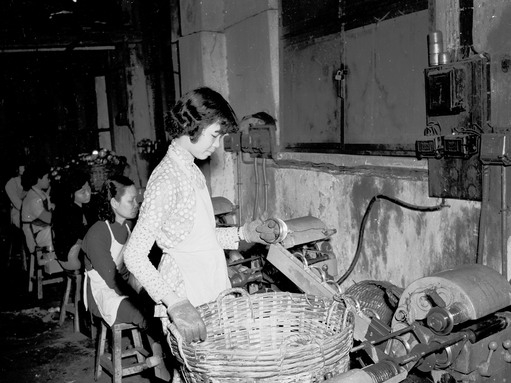
In the early 1990s, China’s manufacturing sector was in its infancy. Most enterprises were small, family-run workshops with outdated equipment, limited technical skills, and almost no brand awareness. At that time, China’s biggest comparative advantage was ultra-low labor costs and mass production capacity. Factories like ours mainly took OEM orders from Europe, North America, and other regions, producing simple, low-value-added goods.
We did not design core technologies; we only followed drawings to assemble. We did not pursue premium materials; we prioritized keeping costs down to win orders. Products were functional at best, with inconsistent workmanship and short service life. For global buyers, Made in China equaled:
This model allowed China to quickly seize global market share and become the world’s factory. But it also left a deeply rooted negative stereotype across Europe and Germany: Chinese goods are cheap, rough, and only for low-end use. Even today, many older European customers still carry this impression—a heavy burden we have carried for decades.
At that time, our factory was no exception. We focused on volume, not quality; on delivery speed, not detail; on survival, not long-term brand building. We earned meager processing fees while international brands took most of the profits. We knew this model was unsustainable, but we had no choice—we had to survive first.
After 2000, China joined the WTO, and global orders surged. But our pain only intensified. The old model of low cost + low quality hit a wall.
European clients, especially German ones famous for rigor, began to reject batches of our products due to welding defects, loose parts, material strength failure, and inconsistent dimensions. One large German medical institution canceled a year-long order overnight, leaving us with massive inventory and a collapsed cash flow—days from bankruptcy.
After 2008, domestic labor and raw material costs rose sharply. The old low-cost advantage vanished. Meanwhile, trade barriers, anti-dumping investigations, and global competition intensified. Many peer factories closed down. We cut salaries, reduced production lines, and took high-interest loans just to stay afloat.
Even when we tried to improve quality, European customers refused to pay premium prices. They said: “It’s still Made in China—how good can it be?”We realized: If we do not completely transform, Made in China will be trapped in the low-end quagmire forever, with no future.
Those years were dark. We faced bankruptcy three times. Each time, we gritted our teeth, restructured, and invested all profits into equipment and training. We understood: survival alone is not enough—we must reborn.


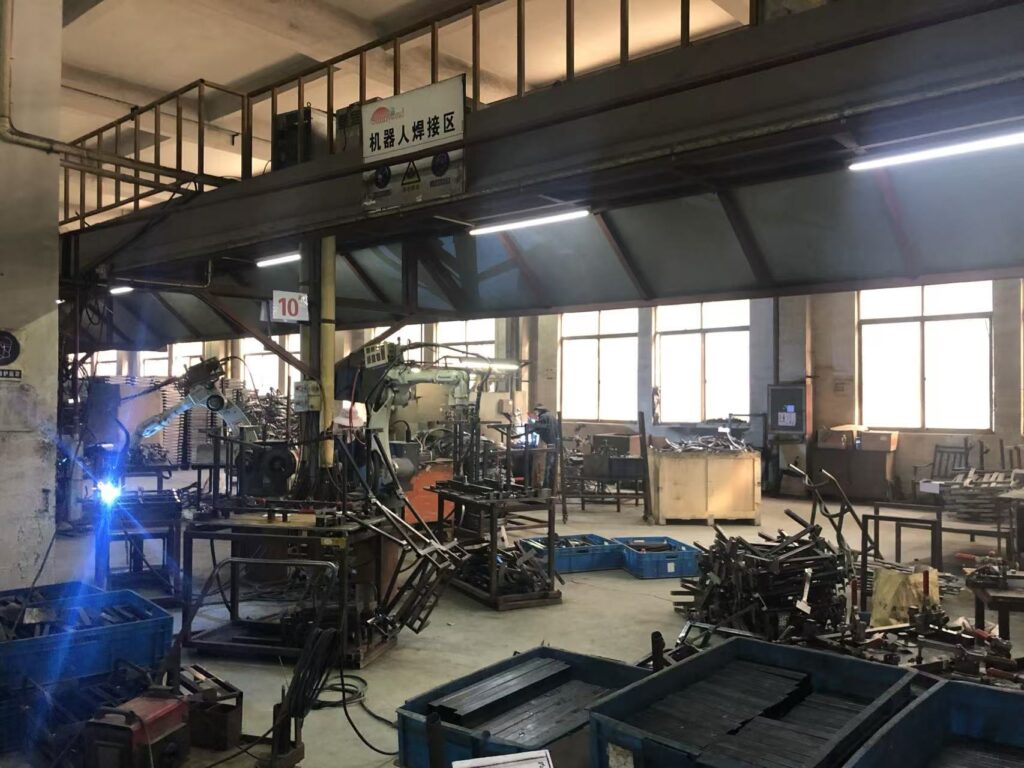
Factory transformation – old equipment replaced by automated precision lines
Since 2010, China’s manufacturing has reached a crossroads. The era of winning by low costs is gone. The whole industry faces a choice:
The national strategy Made in China 2025 clearly pointed the way: toward high-end, intelligent, green, and branded manufacturing. More and more enterprises abandoned extensive growth and shifted to intensive, quality-driven development.
For us in medical equipment, the stakes are even higher. Medical products relate to patients’ health and safety—quality is not an option, but a lifeline. If we cannot break free from “cheap and rough,” we will never gain trust in strict European and German markets
I once watched a Chinese military drama called My Chief and My Regiment. One line struck me deeply:
“Chinese people never lack ideals or ambitions. But compared with these, we love comfort more; we can even give up our lives just for comfort.”
This line reveals our biggest weakness: inertia. For decades, we got used to low-cost, easy money. We feared the pain of reform. But today, comfort is deadly. Only by breaking comfort, enduring hardship, and pursuing quality can Made in China be reborn.This is not just a corporate mission—it is the fate of an entire industry.
At Jingze Medical (https://jingzemedica.com), with over 30 years in medical equipment manufacturing, we have chosen our way forward:
Use solid materials, refine craftsmanship, polish every detail, break stereotypes, and bring trustworthy Chinese medical equipment to Europe and Germany.
We no longer compete on price. We compete on:
| Product Category | Product Name | Key Parameters & Features |
|---|---|---|
| Hospital Beds | A02 Hospital Bed | Carbon steel frame, adjustable back/leg sections, mute casters, load 150kg |
| A09 Hospital Bed | Enhanced steel structure, multi-speed adjustment, corrosion-resistant coating | |
| A04 Hospital Bed | High-strength bed frame, ergonomic design, easy cleaning, suitable for wards | |
| Pediatric Beds | Pediatric Hospital Bed | Safe guardrails, size for children, comfortable mattress, corrosion-proof |
| Bedside Cabinets | Multi-style Bedside Cabinets | ABS / stainless steel, storage drawers, waterproof, easy disinfection |
| Smart Wheelchairs | Various Smart Wheelchairs | Lightweight aluminum, electric drive, foldable, long endurance, safe brakes |
| Stainless Steel Products | Stainless Steel Trolleys / Cases | 304 stainless steel, seamless welding, rust-proof, medical-grade hygiene |
| Pathology Storage Cabinets | Pathology Storage Cabinets | Sealed design, constant temperature control, corrosion-proof, compliant with medical standards |
Our goal is simple: Let European and German customers say:
“This is Made in China—and it is reliable, safe, and worth choosing.”
Today, Made in China is at a historic turning point. The old label of “cheap and rough” is fading. A new image of precision, innovation, and reliability is emerging.
From new energy vehicles to drones, from home appliances to medical equipment, Chinese brands are gaining recognition in Europe and Germany. But the road is still long. We must:
For us at Jingze Medical (https://jingzemedica.com), this journey has just begun. We will continue to:
Over the past 30+ years, Made in China has gone from small workshops and low-cost OEM to today’s quality transformation. It has experienced poverty, crises, misunderstandings, and prejudices. But we never gave up.
As the line says: We never lack ideals or ambitions—we just need to give up false comfort.At Jingze Medical, we choose to walk the hard but right road: quality first, integrity-based, customer-centric. We will keep improving products and services, break stereotypes, and let trustworthy Chinese medical equipment cross oceans to serve patients in Europe, Germany, and worldwide.The future of Made in China is not in low costs—it is in quality, innovation, and trust. This is our commitment and our journey.
Send Us an Inquiry


This article is excellent. China has created countless unimaginable miracles.
Please mail me your product brochure as soon as possible. Thank you.